
Lately, one of the most common questions I’ve been hearing is, “What do you think about the current market conditions?” Often, there’s a deeper concern behind it: “Should I be doing something?” It’s a natural reaction. When uncertainty rises, the instinct to move to cash and reduce risk can feel like the safest path forward.
But history tells a different story. Periods of uncertainty are often when disciplined investing and thoughtful financial planning matter most. The challenge of staying invested is exactly what makes it so valuable over time. The goal isn’t to eliminate risk entirely, but to build a plan that can withstand a wide range of outcomes—so you can remain positioned for eventual recovery.
This post isn’t about telling you what to do. Instead, it’s meant to provide clarity on what’s happening in today’s market so you can maintain perspective and stay focused on the long-term goals that matter most.
1. Markets Hit Their First Pullback
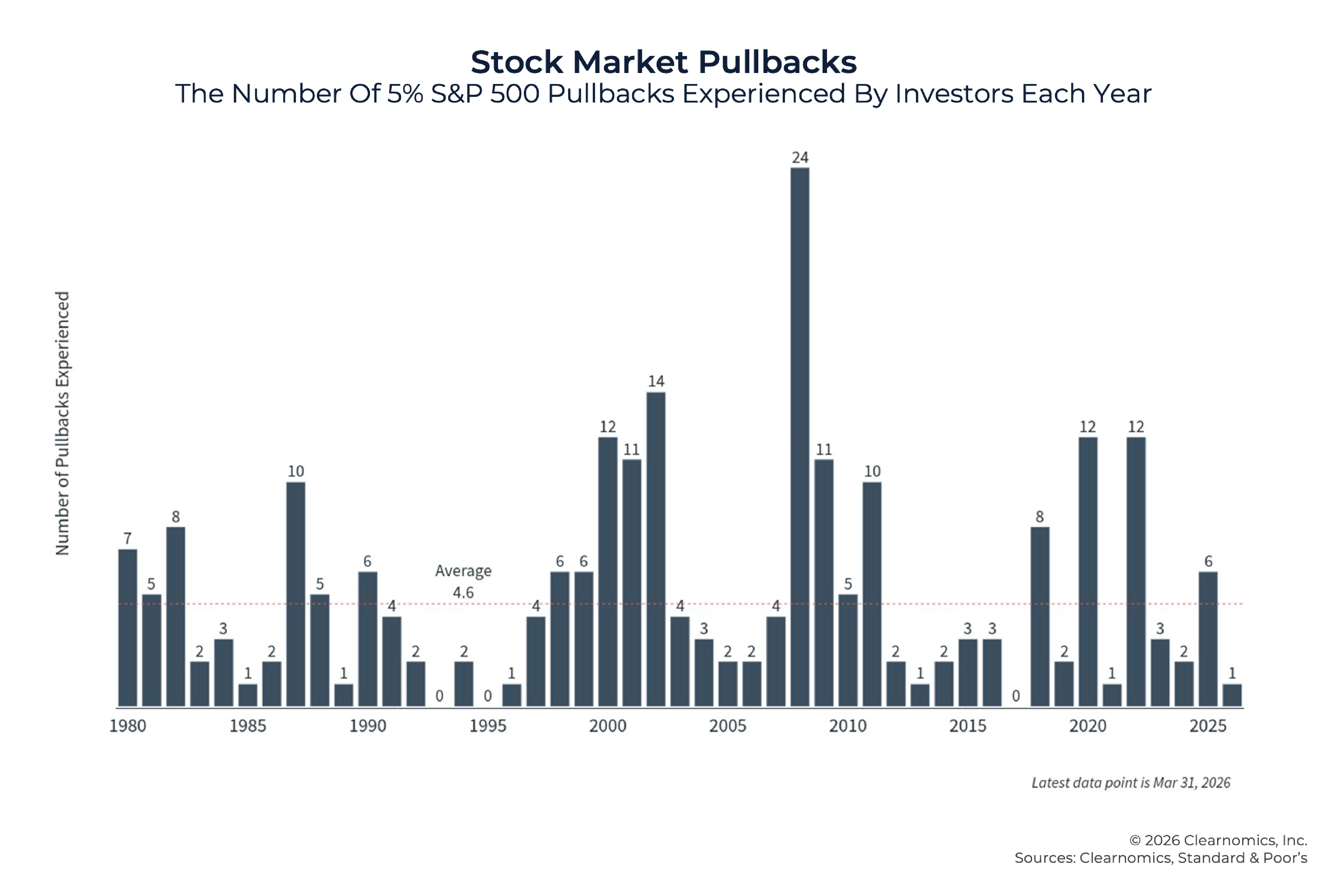
For long-term investors, it is important to remember that pullbacks are a normal and recurring feature of the stock market. Since 1980, the S&P 500 has experienced an average intra-year maximum drawdown of around 15%, yet markets have closed in positive territory in more than two-thirds of years.
Last year's tariff-related volatility is the perfect example to share with clients. The S&P 500 nearly fell to bear market levels with an intra-year decline of 19%. Markets then rebounded quickly and unexpectedly when a pause was announced on reciprocal tariffs. Major indices then went on to hit new record highs within months.
This year's decline, while due to different factors such as geopolitics and AI, remains well within the range of what investors should expect on a regular basis. Volatility, measured by the VIX, has reached its highest level since last April, but is still within normal bounds.
2. Geopolitical Risk Is A Recurring But Temporary Driver Of Markets
Geopolitical events are challenging. Wars, political changes, and regional conflicts can create short-term instability, but their impact on portfolios often fades as situations stabilize. This pattern has held true for markets in recent years, as seen during Russia's invasion of Ukraine, the attacks on Israel in 2023, and more.
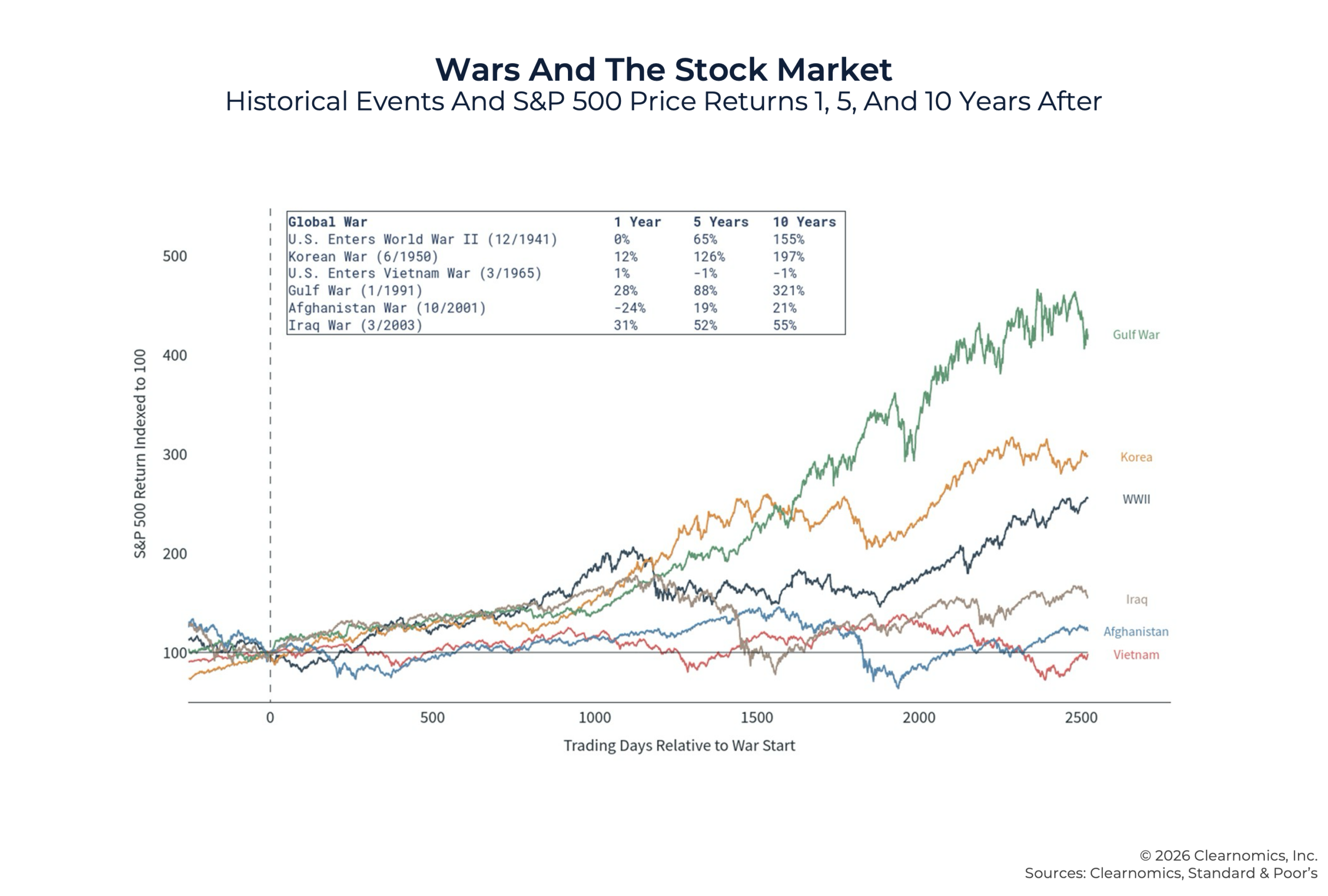
Today's situation is not identical to those of the past, so the key questions are, given the blockage of the Strait of Hormuz and the damage to energy infrastructure, how will energy markets, inflation expectations, and global growth be affected.
Geopolitical risks of this nature are notoriously difficult to predict. There are many unknowns with binary outcomes, including when the war may end and how severe future strikes may be. Still, history shows that investors who make dramatic portfolio adjustments in response to such events often do so at the wrong moment, missing the post-shock recovery that follows. Even the rapid inflation due to the war in Ukraine in 2022 eventually faded.
The goal is to build a portfolio that will weather these challenges. Diversification across industries, sectors, and geography with assets that can benefit from challenges like rising energy prices or even AI. What matters most is not trying to make predictions but to ensure that your portfolios is built to weather a range of outcomes.
3. Oil Prices Surge on Supply Disruptions
We have all experienced the impact of oil prices at pumps. And inflation expectations will affect decisions of central banks around the world. The key question for investors is whether the current spike represents a temporary risk that will fade, or the beginning of a more sustained supply shock that will reshape the inflation outlook. History would suggest it's the former.
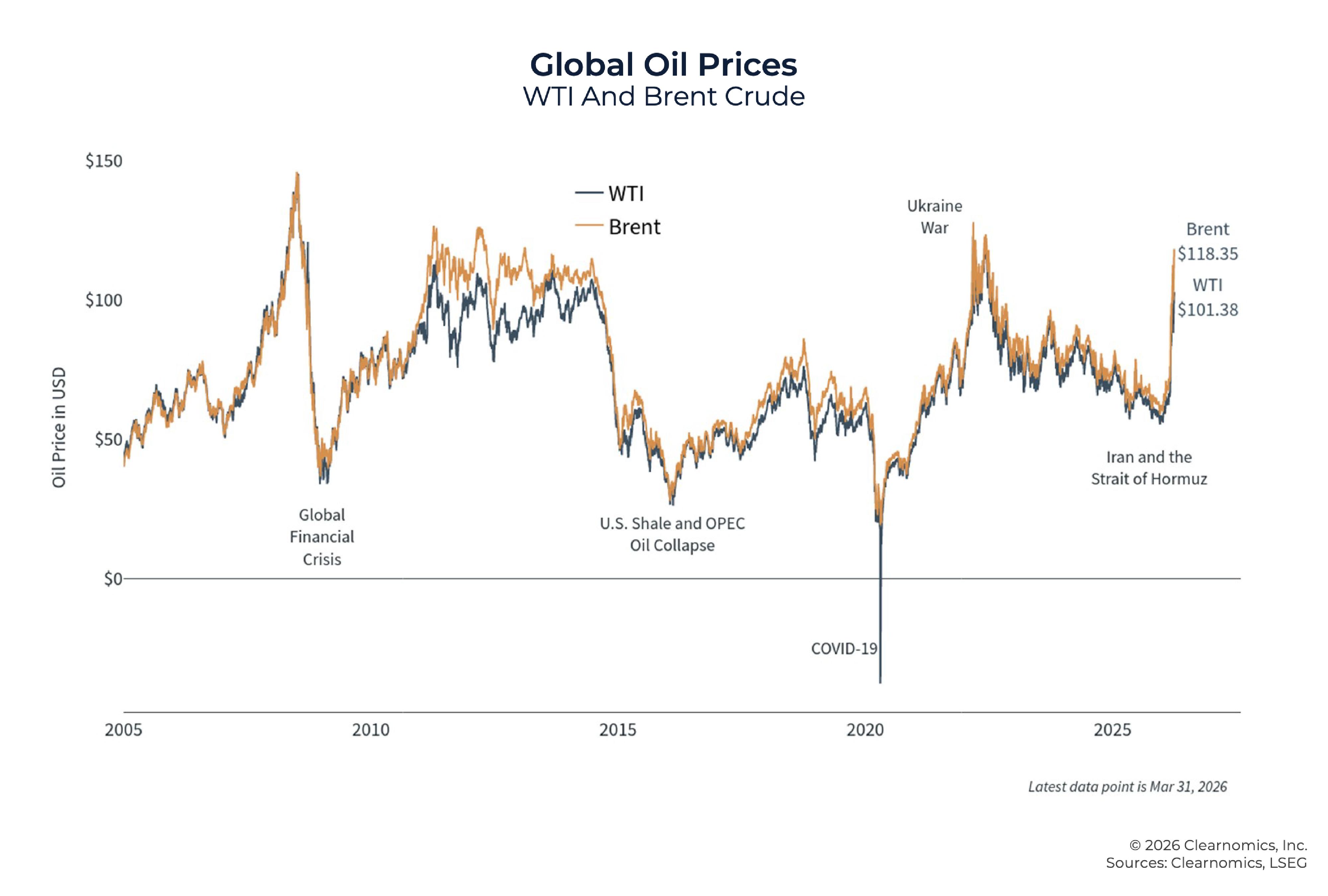
Energy has been the top-performing sector of the market year to date, just as it was in 2021 and 2022, reinforcing why broad sector diversification across a portfolio can help cushion the impact of unexpected macroeconomic developments like the one unfolding today.
4. What’s the Fed to Do?
For much of the past few years, the story of inflation has been one of steady improvement. Prices, which surged to multi-decade highs in 2022, gradually moderated, and investors entered 2026 with reasonable confidence that the Federal Reserve would continue cutting rates as inflation moved closer to its 2% target. This was especially true with a new Fed Chair set to take office in May. That narrative has since become more complicated and, in fact, there is now a higher probability of rate hikes.
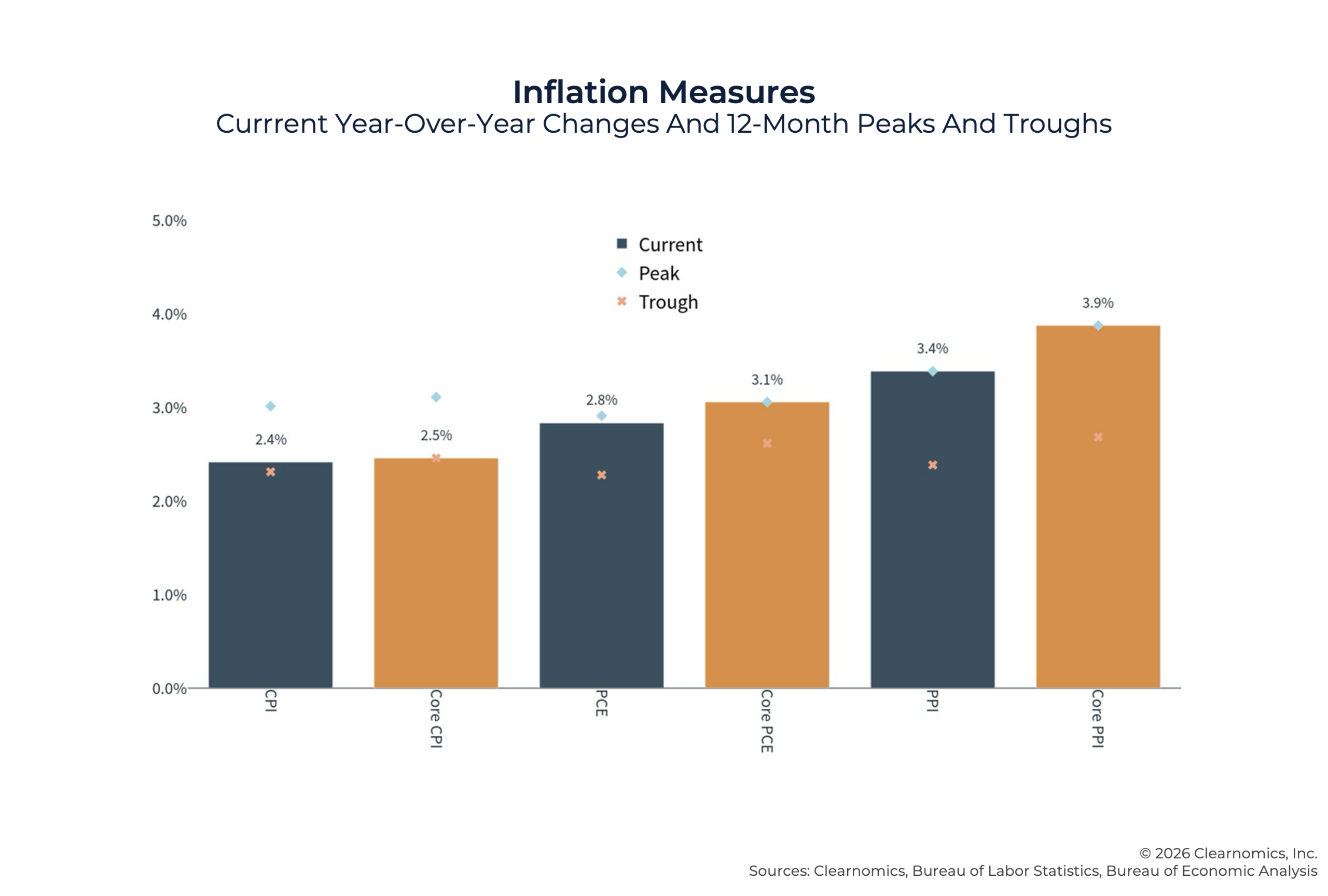
A slower pace of rate cuts means that the tailwind of lower borrowing costs provided to equities and fixed income could be more modest. At the same time, bonds continue to offer attractive yields by historical standards, reinforcing their value as a source of income and portfolio stability.
Rather than reacting to each inflation report or Fed statement, maintaining a diversified portfolio that can perform across different rate environments remains the most reliable path forward.
5. The Labor Market and the Economy
In other words, both the supply and demand sides of the labor market are cooling, which has helped keep the unemployment rate from rising.
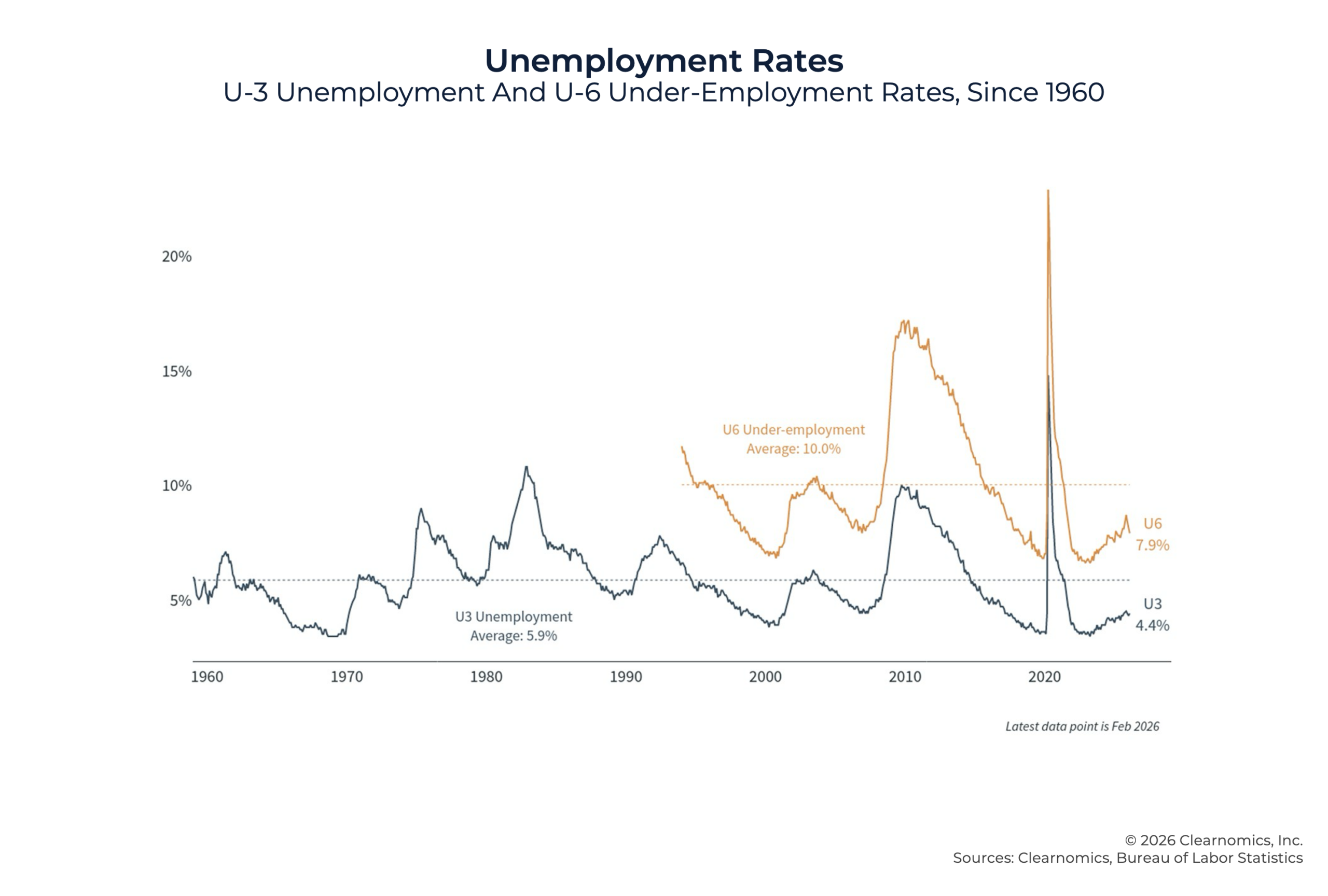
Investors tend to watch the labor market closely because it is tangible in a way that many other economic indicators are not. For long-term investors, it is important to look beyond headline economic figures and maintain a diversified portfolio that is not overly dependent on any single economic scenario.
6. What About AI?
For the past several years, artificial intelligence has been the dominant force shaping the stock market with the Mag 7 driving most of the returns. The market is now asking a harder question, specifically, which companies are monetizing AI, and which are simply spending on it?
This is not new. In fact, this pattern has played out with every major technological revolution. History shows that transformative technologies tend to move through three distinct phases. First the infrastructure build-out, when capital floods into the companies. Next comes integration, where businesses begin adopting the technology. Finally, and most importantly for the broader economy, come the productivity gains that generate lasting economic value.
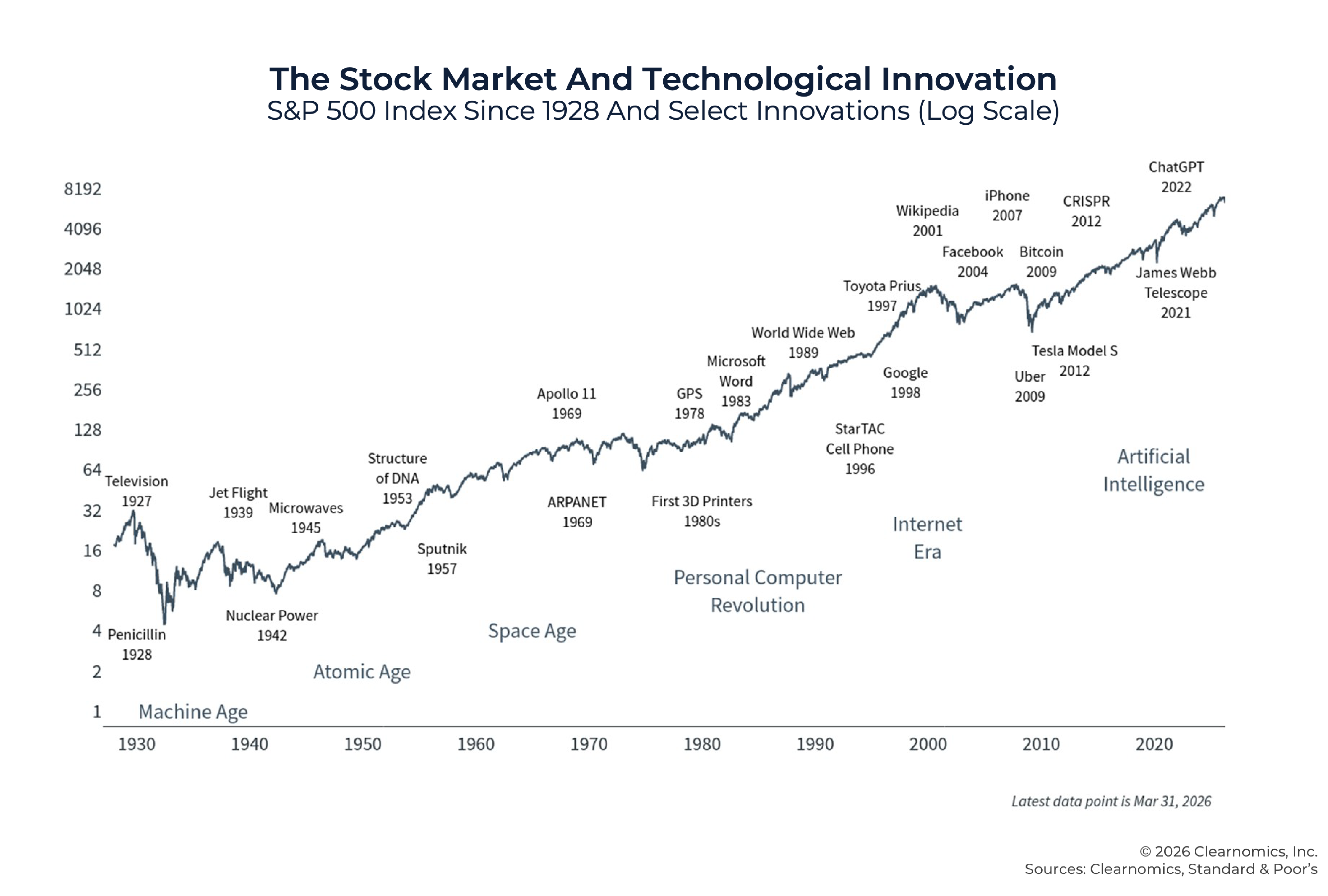
A newer and more pointed dimension to the AI conversation is the possibility of technology displacing knowledge workers. Regardless of whether the most dramatic projections prove accurate, the prospect of widespread automation-driven job losses in sectors ranging from legal services to financial analysis has the potential to reshape both consumer sentiment and labor market dynamics.
For investors and their portfolios, the key lesson from prior technological cycles is that the companies and sectors that benefit most from a transformative technology are not always the ones that dominated the initial infrastructure phase. Railroads built the arteries of 19th-century commerce, but it was the manufacturers, retailers, and agricultural producers that used those railroads who generated much of the long-run economic value. This reinforces the importance of maintaining broad diversification rather than concentrating in any single stock or theme.
7. Are Earnings and Growth Stretched?
For much of the past several years, rising stock prices were driven by a combination of earnings growth and expanding valuations, meaning investors were willing to pay more for each dollar of future profits. However, valuation multiples have largely stopped expanding, despite continued earnings growth supporting investors.
The current earnings and valuation picture confirms this reality:
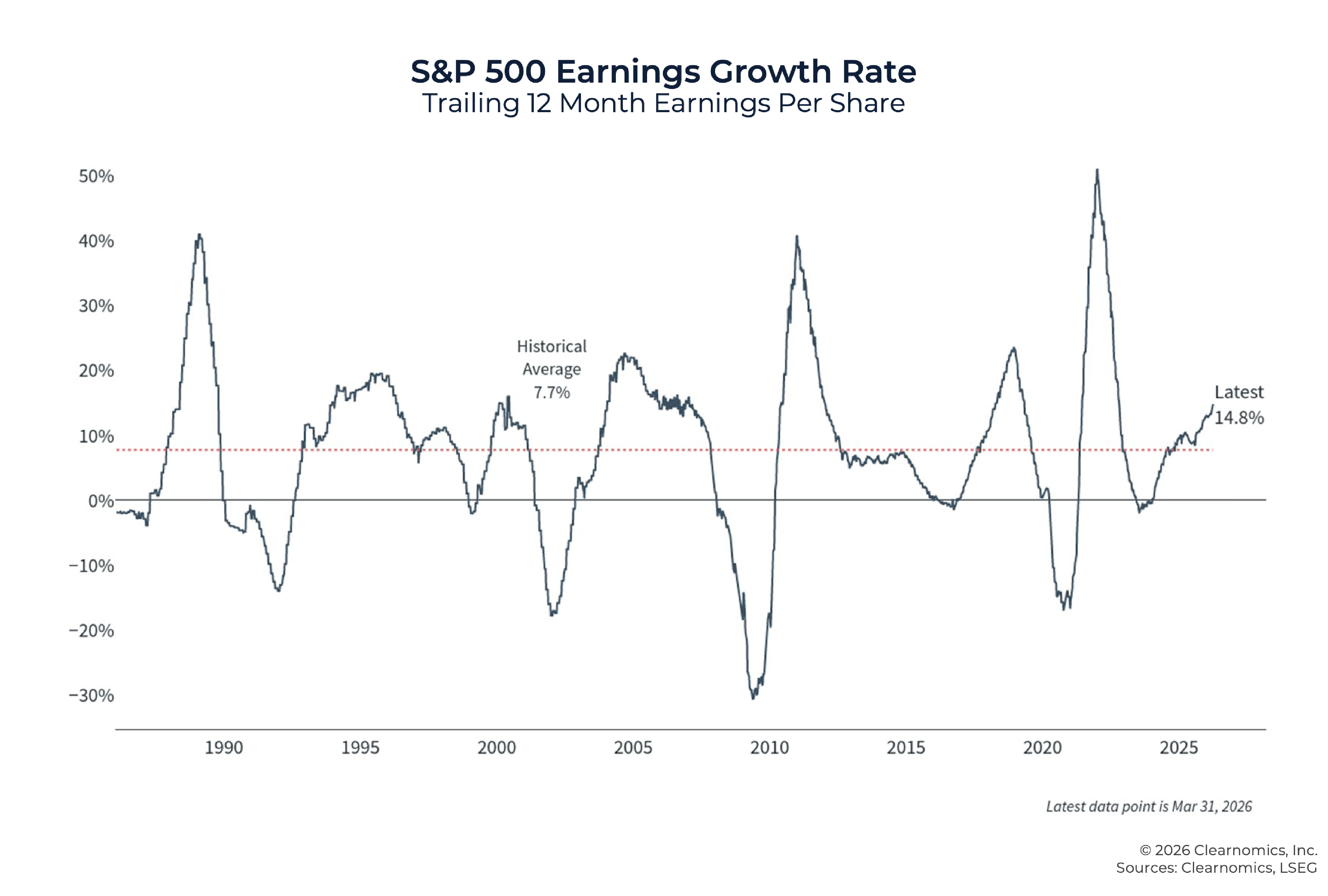
In an environment where valuations are stretched and no longer expanding, earnings become the primary engine of market returns. Markets are also paying closer attention to the quality of earnings, the sustainability of profit margins, and the guidance companies offer about the future.
This higher sensitivity to earnings quality reflects a market that is grounded in fundamentals rather than optimism alone.
This reinforces why maintaining a long-term perspective matters – earnings grow over time as the economy expands, and staying invested through periods of uncertainty is how investors capture that growth.
8. Stay Invested Even When Uncertain!
Stay invested through periods of uncertainty!!! This is the most powerful driver of long-term returns. Market recoveries tend to be swift and concentrated, meaning that investors who exit during periods of stress frequently miss the strongest days of a rebound.
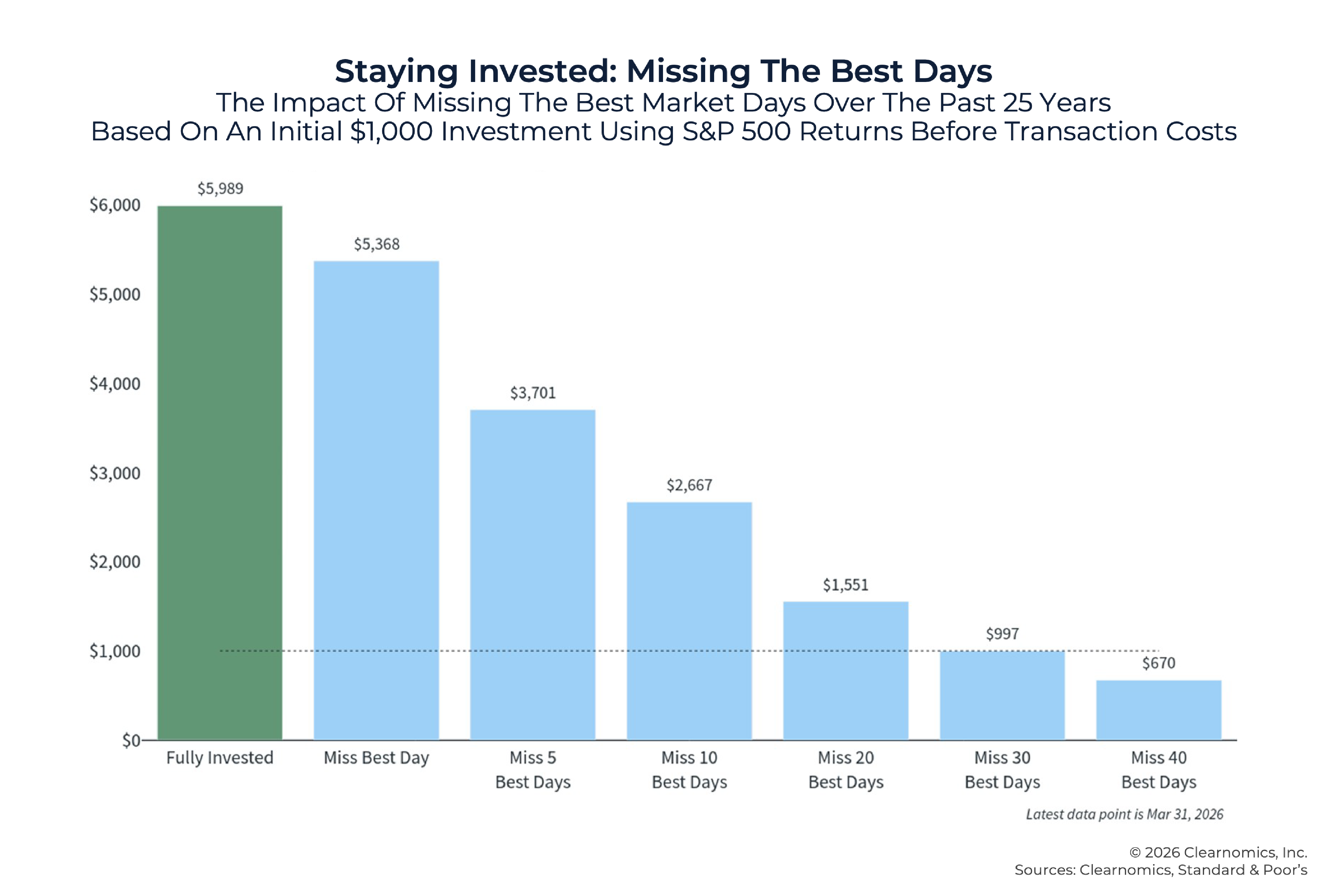
You may be tempted to time the market, but the difficulty lies not only in knowing when to exit but also in knowing when to re-enter. So you have to be right twice! This is not always easy but it is important.
Remember why you built your portfolio! A well-constructed portfolio is not designed to avoid every storm, but to weather them and remain positioned for the recovery that follows. When one segment of a portfolio faces headwinds, another may offer balance. Over time, this approach has enabled investors to participate in growth while managing risk, which is ultimately what achieving long-term financial objectives demands.
Markets will continue to test your resolve, as they always have. Whether the conversation centers on oil prices, inflation, credit markets, or the sustainability of AI-driven valuations, the answer is the same: a well-constructed portfolio aligned with long-term financial goals remains the most reliable path forward.

Financial advisor for those who have saved $1,000,000 or more for retirement